Why the Research Agent Exists#
Every video Kedapix produces starts with a question: what does the audience need to know right now, and where does that knowledge actually come from?
For years, answering that question meant hours of manual work: opening tabs, skimming articles, cross-checking claims, and hoping nothing slipped through. Growth teams and independent creators were spending more time sourcing material than shaping it. The research agent was built to close that gap.
The core promise is simple: give Kedapix a topic, and it returns a structured, source-verified brief ready for video production. No tabs, no guesswork, no trailing footnotes to chase down later.
From Prompt to Brief: How It Works#
The journey begins the moment you type a prompt into the Kedapix dashboard. A prompt can be as tight as a headline ("Fed rate decision reaction") or as open as a theme ("consumer sentiment in EVs this quarter"). Either way, the agent treats it as a brief contract: here is what needs to be explained, now go find out.
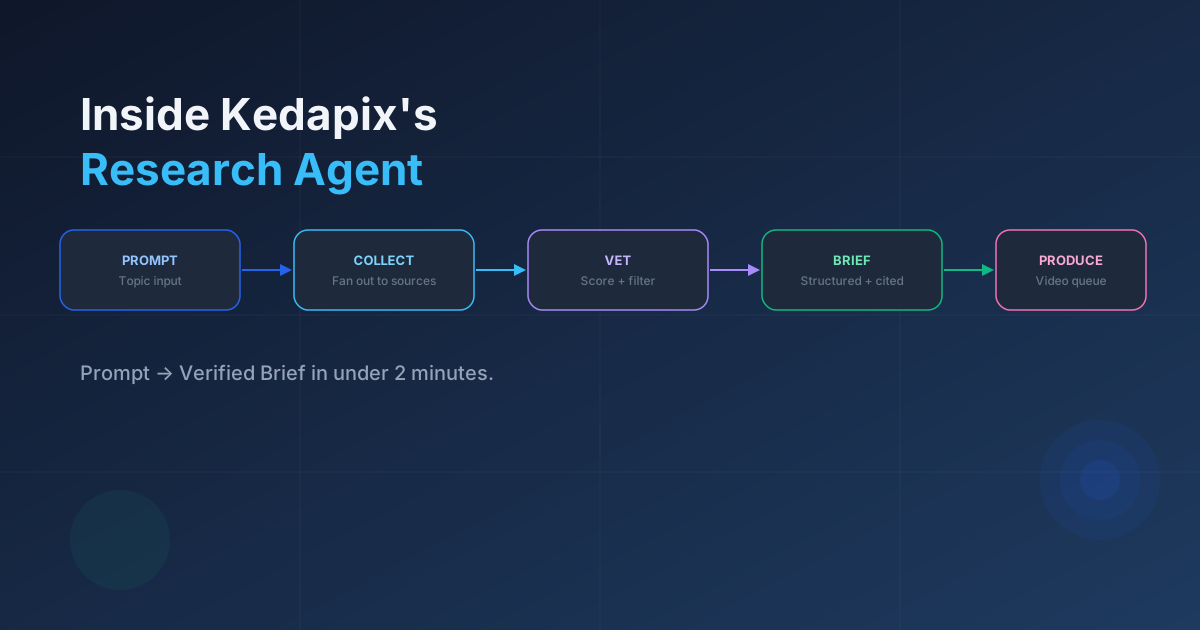
Here is the end-to-end flow the agent runs for every request:
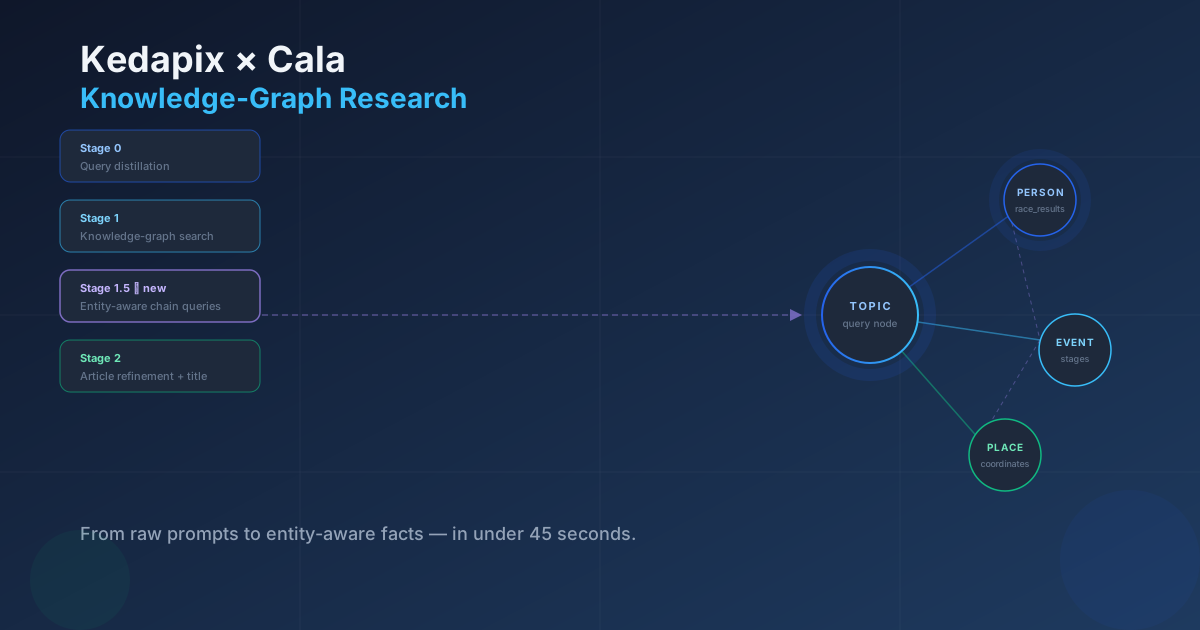
- Parse the prompt: extract the core topic, implied audience, and any time sensitivity signals.
- Identify source categories: decide which corpus types are relevant: news feeds, regulatory filings, creator libraries, or curated reference sets.
- Collect signals: fan out to approved sources in parallel, pulling the freshest matching content within each source's allowed freshness window.
- Score and filter: rank results by relevance, recency, and credibility. Anything below the configured threshold is discarded before it enters the brief.
- Double-check sources: run a second pass to flag contradictions, stale claims, or sources that conflict with each other.
- Assemble the structured brief: group findings into talking points, attach citations, and flag items that need a human decision before production.
- Hand off to production: deliver the completed brief to the video agent queue, ready for scripting.
The full cycle, for a typical breaking-news topic, takes under two minutes.
How Source Vetting Works#
Speed is only half the value. The other half is trust.
Kedapix doesn't pull from the open web indiscriminately. Every research run draws from a curated set of sources that your team has approved in advance. Each source carries metadata: category, reliability tier, and a freshness window that defines how old a piece of content can be before the agent treats it as stale.
When conflicting signals appear (two sources making opposite claims about the same data point), the agent flags the conflict explicitly in the brief rather than silently picking a winner. Editors see the disagreement in the review queue and resolve it with one click. That decision is logged and used to train how similar conflicts are scored in future runs.
Over time, the system learns which sources your team trusts for which topic types. The vetting layer gets sharper without requiring manual tuning.
Research Guarantees#
Here is how Kedapix describes its research commitments in plain terms:
| Guarantee | What it means |
|---|---|
| Source accuracy | Every claim in a brief traces back to an approved, versioned source. No unsourced assertions reach the video script. |
| Source diversity | The agent is configured to draw from multiple source categories per brief, avoiding single-source dependency. |
| Audit trail | Every brief records which sources were considered, which were accepted, which were rejected, and why. |
| Human override | Any brief item can be accepted, rejected, or edited by a human before production begins. Those decisions are stored alongside the brief. |
| Conflict surfacing | Contradictory signals are never silently resolved; they are flagged for editor review. |
How Research Feeds the Video Pipeline#
A finished brief isn't a document. It's a structured handoff.
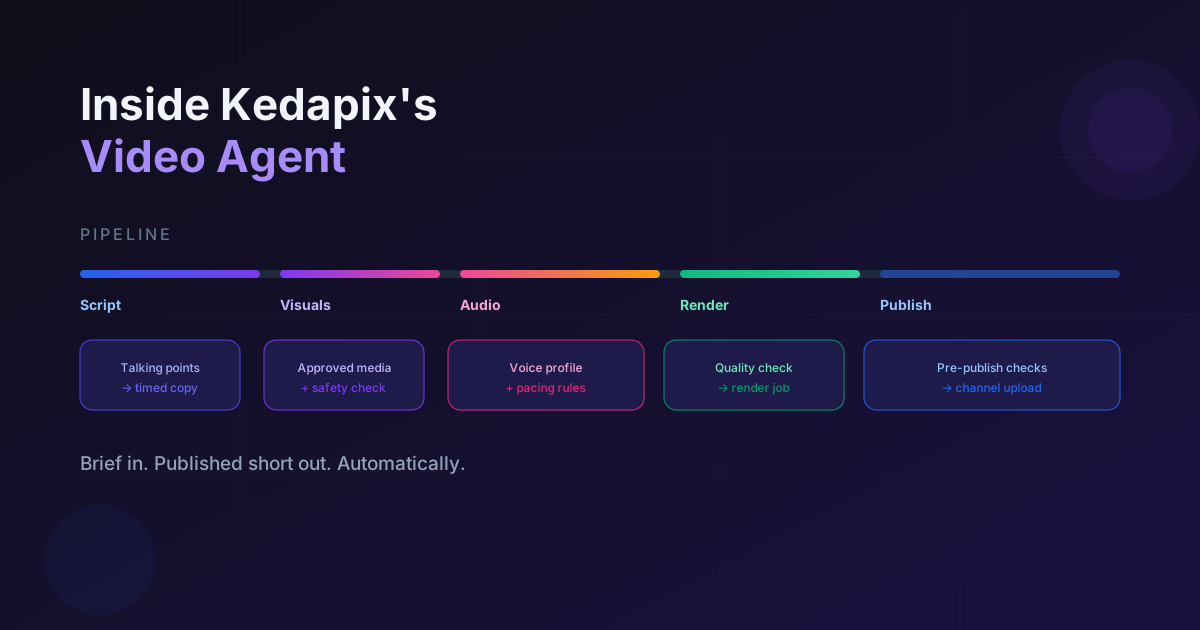
When the research agent marks a brief complete, the video agent picks it up automatically. Each talking point in the brief maps directly to a segment of the video script. Citations travel with the brief, so they can appear as on-screen source cards during rendering.
This tight coupling between research and production is what allows Kedapix to maintain accuracy under volume. The video agent never improvises facts; it scripts from what research has verified. If a talking point is flagged or removed during review, that segment is dropped from the video scope before rendering begins.
“Before Kedapix, our researchers were spending four hours a day just triaging sources for the video team. Now the brief arrives pre-verified and the team jumps straight into review. We've cut production prep from a half-day to about forty minutes.
”
What's Next for Research#
The research agent is already handling multiple brief types (breaking news, product updates, trend roundups), but the roadmap goes further.
Upcoming capabilities include tighter integration with creator-owned archives, so your proprietary research libraries can feed briefs alongside public sources. We're also building topic-level memory: the agent will recall what angles your team has already covered on a topic and surface genuinely new angles instead of retreading familiar ground.
Longer term, we're exploring multi-language research briefs so global growth teams can produce localized content without duplicating their source libraries.
Start with Verified Research#
The best time to know whether your sources hold up is before the script is written, not after the video is live. That's what the research agent is designed to guarantee.
If you want to see a live research run on a topic that matters to your team, the pilot program is the fastest way to get there.
Next up: Inside Kedapix's Video Agent, how a verified brief becomes a published short in under an hour.